
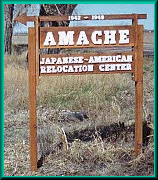
 Amache is located on Highway 385 near Granada Colorado
between Lamar and Holly. The United States government exiled thousands of
Japanese American citizens to internment camps during World War II. One
of these camps was, Camp Amache which was also known as the Granada Relocation
Center. Camp Granada was known as "The Gateway to Colorado" during
the 1800s. It was a stopover along the Santa Fe Trail and was officially
founded in 1873 and named in honor of a former Spanish kingdom by unknown
persons. After losing a bid to become the county seat to Lamar, in the late
1800s, Granada became a ghost town. With the building of Camp Amache in
1942, Granada became a boom town once again.
Amache is located on Highway 385 near Granada Colorado
between Lamar and Holly. The United States government exiled thousands of
Japanese American citizens to internment camps during World War II. One
of these camps was, Camp Amache which was also known as the Granada Relocation
Center. Camp Granada was known as "The Gateway to Colorado" during
the 1800s. It was a stopover along the Santa Fe Trail and was officially
founded in 1873 and named in honor of a former Spanish kingdom by unknown
persons. After losing a bid to become the county seat to Lamar, in the late
1800s, Granada became a ghost town. With the building of Camp Amache in
1942, Granada became a boom town once again.
 The year 1942 witnessed an unprecedented event in the
long epic of America. Directly after Japan’s attack on Pearl Harbor
and the declaration of war, operations started a chain of events which finally
culminated in the complete removal of all Japanese, both citizens and aliens
alike from the west coast. On February 19, by Executive order, the president
authorized the military commander to prescribe certain areas from which
any or all persons of Japanese ancestry may be excluded. On March 2, Lieutenant
General J. L. DeWitt, commander of the Western Defense Command, issued a
proclamation designating military areas in the states of Oregon, Arizona,
California and Washington from which the Japanese, both aliens and citizens
were to be evacuated. On March 14, the Wartime Civil Control Administration
was established to supervise the vast evacuation program. Through this office
the Japanese disposed of their properties, received their instructions and
were ushered into the various assembly centers prior to their exodus further
inland.
The year 1942 witnessed an unprecedented event in the
long epic of America. Directly after Japan’s attack on Pearl Harbor
and the declaration of war, operations started a chain of events which finally
culminated in the complete removal of all Japanese, both citizens and aliens
alike from the west coast. On February 19, by Executive order, the president
authorized the military commander to prescribe certain areas from which
any or all persons of Japanese ancestry may be excluded. On March 2, Lieutenant
General J. L. DeWitt, commander of the Western Defense Command, issued a
proclamation designating military areas in the states of Oregon, Arizona,
California and Washington from which the Japanese, both aliens and citizens
were to be evacuated. On March 14, the Wartime Civil Control Administration
was established to supervise the vast evacuation program. Through this office
the Japanese disposed of their properties, received their instructions and
were ushered into the various assembly centers prior to their exodus further
inland.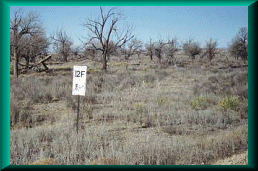 On June 29, 1942, construction work on Amache began.
Progress on the new camp was slow. Labor strikes by a number of independent
companies contracted to build the camp only created further delays. The
army officials and members of the WRA did not always work well together.
The internment camp was only half complete when the first evacuees began
arriving from the assembly centers. On August 27, 1942, the first railroad
train carrying 212 evacuees from the Merced Assembly Center arrived at Camp
Amache. They mainly came from the farming regions in the Central Valley
of California. With only a portion of the camp actually finished these evacuees
were chosen due to their diverse skills, the idea being that they would
make Amache a self sustaining-facility. These first men and women were artisans,
stenographers, clerks, cooks, and other specialists who could aid the WRA
officials in preparing the center for settlement. When the evacuees arrived,
only two blocks of barracks, one mess hall, and one lavatory had been completed.
On June 29, 1942, construction work on Amache began.
Progress on the new camp was slow. Labor strikes by a number of independent
companies contracted to build the camp only created further delays. The
army officials and members of the WRA did not always work well together.
The internment camp was only half complete when the first evacuees began
arriving from the assembly centers. On August 27, 1942, the first railroad
train carrying 212 evacuees from the Merced Assembly Center arrived at Camp
Amache. They mainly came from the farming regions in the Central Valley
of California. With only a portion of the camp actually finished these evacuees
were chosen due to their diverse skills, the idea being that they would
make Amache a self sustaining-facility. These first men and women were artisans,
stenographers, clerks, cooks, and other specialists who could aid the WRA
officials in preparing the center for settlement. When the evacuees arrived,
only two blocks of barracks, one mess hall, and one lavatory had been completed.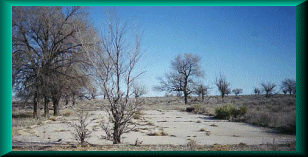 By the end of October Amache had reached its peak population
of 7,567 evacuees and two-thirds of the evacuees were American citizens.
Amache was ranked as the tenth largest city in the state of Colorado. When
completed the camp area was one square mile and consisted of twenty-nine
"blocks" of barracks, administration buildings, and storage areas.
Each block consisted of twelve 120' x 20' tar paper-roofed Army style barracks.
The barracks were made of bone insulation board walls, exposed roof rafters,
and brick floors set in dirt. The families decorated their apartments by
using their own skills and resources. The furniture was homemade from scrap
lumber which was found around the camp perimeters. The barracks were divided
into six apartments varying in size from 16' x 20' to 24' x 20'. Each individual
apartment was equipped with a coal-burning stove, one light bulb in the
center of each room, Army cots, and a pad or blanket. Families of seven
people or less were only given one room and families of more than seven
were given two rooms. The evacuees were forced to eat and bathe together.
By the end of October Amache had reached its peak population
of 7,567 evacuees and two-thirds of the evacuees were American citizens.
Amache was ranked as the tenth largest city in the state of Colorado. When
completed the camp area was one square mile and consisted of twenty-nine
"blocks" of barracks, administration buildings, and storage areas.
Each block consisted of twelve 120' x 20' tar paper-roofed Army style barracks.
The barracks were made of bone insulation board walls, exposed roof rafters,
and brick floors set in dirt. The families decorated their apartments by
using their own skills and resources. The furniture was homemade from scrap
lumber which was found around the camp perimeters. The barracks were divided
into six apartments varying in size from 16' x 20' to 24' x 20'. Each individual
apartment was equipped with a coal-burning stove, one light bulb in the
center of each room, Army cots, and a pad or blanket. Families of seven
people or less were only given one room and families of more than seven
were given two rooms. The evacuees were forced to eat and bathe together.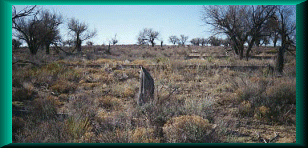 Once the government had decided to establish an internment
camp in Colorado many people were against the arrival of the Japanese. Not
long after the establishment of the camp, public opinion turned against
the WRA and Amache itself. Some newspapers were against the interment camp
and some were favorable. Despite the newspaper's support, public opinion
was turned against the evacuees at Amache. Animosity stemmed from the enormous
waste of money to build the camp, farmers' complaints that the Japanese
now had the best farmland in the state, but the majority of the hostility
was based on hatred for Japan.
Once the government had decided to establish an internment
camp in Colorado many people were against the arrival of the Japanese. Not
long after the establishment of the camp, public opinion turned against
the WRA and Amache itself. Some newspapers were against the interment camp
and some were favorable. Despite the newspaper's support, public opinion
was turned against the evacuees at Amache. Animosity stemmed from the enormous
waste of money to build the camp, farmers' complaints that the Japanese
now had the best farmland in the state, but the majority of the hostility
was based on hatred for Japan.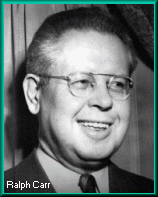 The most notable supporter of the evacuees was the governor of Colorado
Ralph L. Carr. After the evacuation of the ethnic Japanese from the west
coast, Carr welcomed all evacuees to resettle in Colorado. He stated: "This
is a difficult time for all Japanese-speaking people. We must work together
for the preservation of our American system and the continuation of our
theory of universal brotherhood . . . If we do not extend humanity's kindness
and understanding to [the Japanese-Americans], if we deny them the protection
of the Bill of Rights, if we say that they must be denied the privilege
of living in any of the 48 states without hearing or charge of misconduct,
then we are tearing down the whole American system."
The most notable supporter of the evacuees was the governor of Colorado
Ralph L. Carr. After the evacuation of the ethnic Japanese from the west
coast, Carr welcomed all evacuees to resettle in Colorado. He stated: "This
is a difficult time for all Japanese-speaking people. We must work together
for the preservation of our American system and the continuation of our
theory of universal brotherhood . . . If we do not extend humanity's kindness
and understanding to [the Japanese-Americans], if we deny them the protection
of the Bill of Rights, if we say that they must be denied the privilege
of living in any of the 48 states without hearing or charge of misconduct,
then we are tearing down the whole American system."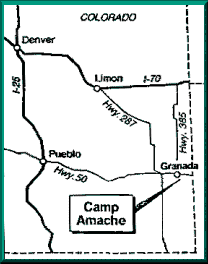 The majority of Western public leaders were anti-Japanese
until well after the end of the war, and governor Carr's support for the
Japanese was extremely controversial. Carr was overwhelmingly defeated in
the U.S. Senate and retired from public life after only serving one term
as governor. His support of the Japanese has not been forgotten. Just outside
of the Colorado governor's office is a plaque dedicated to him which reads:
The majority of Western public leaders were anti-Japanese
until well after the end of the war, and governor Carr's support for the
Japanese was extremely controversial. Carr was overwhelmingly defeated in
the U.S. Senate and retired from public life after only serving one term
as governor. His support of the Japanese has not been forgotten. Just outside
of the Colorado governor's office is a plaque dedicated to him which reads: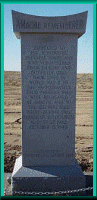 The evacuees had little freedom of movement outside of Amache. Evacuees
were allowed to go outside of camp to shop at Lamar or elsewhere if they
could find their own transportation. These short-term leave clearances were
only granted once a month to each person. Evacuees were also permitted to
take seasonal leave which allowed people to take a temporary employment
in industry and agriculture. As the Japanese were driven from our waters,
WRA officials began relocating the evacuees as quickly as possible. By May
1943, 1,380 evacuees had left Amache to obtain outside employment. In April
1943 the Presidential announcement of the Japanese execution of captured
American flyers brought a temporary halt to evacuation. The relocation process
began once again by the first of June and evacuees were allowed to move
as freely as they had before the incident. Amache received the arrival of
539 evacuees from the internment camp in Jerome, AR. The government intended
to close this camp as quickly as possible and sent the evacuees to Amache.
Even with the increase of population, by March 24, 1944 two-thousand people
had relocated from Amache. The United States government acquired all of
the shipping expenses of all personal property of the evacuees and this
prompted an increase in evacuation. After August 1944 the final phase of
the relocation process began.
The evacuees had little freedom of movement outside of Amache. Evacuees
were allowed to go outside of camp to shop at Lamar or elsewhere if they
could find their own transportation. These short-term leave clearances were
only granted once a month to each person. Evacuees were also permitted to
take seasonal leave which allowed people to take a temporary employment
in industry and agriculture. As the Japanese were driven from our waters,
WRA officials began relocating the evacuees as quickly as possible. By May
1943, 1,380 evacuees had left Amache to obtain outside employment. In April
1943 the Presidential announcement of the Japanese execution of captured
American flyers brought a temporary halt to evacuation. The relocation process
began once again by the first of June and evacuees were allowed to move
as freely as they had before the incident. Amache received the arrival of
539 evacuees from the internment camp in Jerome, AR. The government intended
to close this camp as quickly as possible and sent the evacuees to Amache.
Even with the increase of population, by March 24, 1944 two-thousand people
had relocated from Amache. The United States government acquired all of
the shipping expenses of all personal property of the evacuees and this
prompted an increase in evacuation. After August 1944 the final phase of
the relocation process began.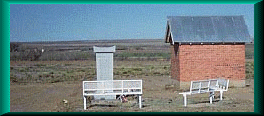 Indefinite leave was issued and allowed evacuees to
leave the camp to pursue higher education, employment, or to resettle elsewhere
in the U.S. WRA offices were established in Chicago, Denver, Cleveland,
Kansas City, Salt Lake City, Little Rock and New York City to aid in the
reintegration of camp residents back into society. Many Japanese wished
to leave the camps, but refused to do so until they could return to California.
On September 9, 1944, Dillion Meyer director of the WRA announced that the
camps would not close until the ban which excluded the Japanese from the
West Coast was lifted. The ban was revoked on December 17, 1944.
Indefinite leave was issued and allowed evacuees to
leave the camp to pursue higher education, employment, or to resettle elsewhere
in the U.S. WRA offices were established in Chicago, Denver, Cleveland,
Kansas City, Salt Lake City, Little Rock and New York City to aid in the
reintegration of camp residents back into society. Many Japanese wished
to leave the camps, but refused to do so until they could return to California.
On September 9, 1944, Dillion Meyer director of the WRA announced that the
camps would not close until the ban which excluded the Japanese from the
West Coast was lifted. The ban was revoked on December 17, 1944.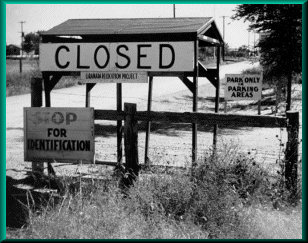 Not one evacuee left Amache the first day after the
exclusion order had been lifted. On January 7, 1945, there were still 6,179
evacuees at Amache. On March 7, 1945, the WRA announced that it was no longer
necessary to have prior relocation plans approved in an attempt to speed
up the evacuation process. Many evacuees were frightened to leave Amache.
The camp had become their home and they were afraid of what awaited them
outside of the camp. On July 18, 1945, Director Lindley tried to relieve
these fears by stating the following: "Make no mistake. The thousands
who have relocated are happy; they wonder why they put up with a subnormal
existence in a relocation center as long as they did. I have received hundreds
of personal letters from people who have successfully relocated. You can
do the same . . . Don't put off going until October, go now; not next month;
not next week; not tomorrow; today! You will benefit by every day you save,
and a day out of the center is a day saved." The announcement on
August 15, 1945 of the surrender of the Japanese forces in the Pacific helped
to encourage the relocation of the evacuees. Many had refused to leave,
citing that the government closing before the end of the war was breaking
its promise to keep the centers in operation for the duration of the war.
On October 15, 1945, the last evacuees left Amache on a train for Sacramento.
Camp Amache was officially closed as scheduled.
Not one evacuee left Amache the first day after the
exclusion order had been lifted. On January 7, 1945, there were still 6,179
evacuees at Amache. On March 7, 1945, the WRA announced that it was no longer
necessary to have prior relocation plans approved in an attempt to speed
up the evacuation process. Many evacuees were frightened to leave Amache.
The camp had become their home and they were afraid of what awaited them
outside of the camp. On July 18, 1945, Director Lindley tried to relieve
these fears by stating the following: "Make no mistake. The thousands
who have relocated are happy; they wonder why they put up with a subnormal
existence in a relocation center as long as they did. I have received hundreds
of personal letters from people who have successfully relocated. You can
do the same . . . Don't put off going until October, go now; not next month;
not next week; not tomorrow; today! You will benefit by every day you save,
and a day out of the center is a day saved." The announcement on
August 15, 1945 of the surrender of the Japanese forces in the Pacific helped
to encourage the relocation of the evacuees. Many had refused to leave,
citing that the government closing before the end of the war was breaking
its promise to keep the centers in operation for the duration of the war.
On October 15, 1945, the last evacuees left Amache on a train for Sacramento.
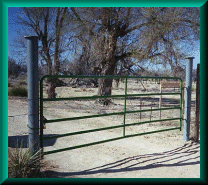
Camp Amache was officially closed as scheduled.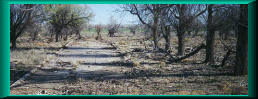 All that is left of this once tenth largest city in
Colorado, Camp Amache, is a memorial, the camp cemetery, and the haunting
foundations overgrown with prairie grass. The internment camps are a black
spot on America's soul. It is Colorado's only monumental reminder of the
role it played in the nation's tragic internment history. Amache as it appears
today is pictured at right
All that is left of this once tenth largest city in
Colorado, Camp Amache, is a memorial, the camp cemetery, and the haunting
foundations overgrown with prairie grass. The internment camps are a black
spot on America's soul. It is Colorado's only monumental reminder of the
role it played in the nation's tragic internment history. Amache as it appears
today is pictured at right Site Map |
La Junta Sites |
Lamar Sites |
Trinidad Sites |
Byway Museums |
Byway Events |
Byway Links |
