
 Coal Comes of Age
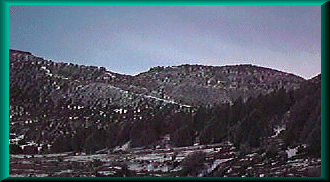
When people familiar with southern Colorado think of the area's once abundant coal mining camps, they correctly envision small, active communities scattered about the slopes of the many foothills making up much of the state's terrain. These coal mining camps included Cokedale, Sutfield, Forbes, Majestic, Black Hills, Ludlow, Tabasco, Berwind, Tollerburg, and Morley. The ruins of some of these camps still remain today. The camps, which once served as the primary vertebrae found within the economic backbone of southern Colorado, brought to the area an indelible history. One that has been overlooked or nonchalantly been allowed to take a back seat to less colorful facets of the area's recorded past. The photo above shows the switch backs of Majestic Mine.
 Though the history of the region's coal mining goes back to the last
quarter of the 1800s, most camps, and especially those found in Las Animas
County, gained fame (or infamy) during the 1913-14 coal mining strike. The
strike stood out for many reasons. It allowed for heavy human casualties
and property damage. It caused concerns for government officials at all
levels. It allowed for the violation of the dignity of law and order within
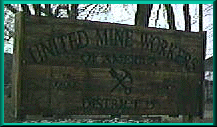
Las Animas County. Pictured at right, the entry sign to Ludlow Memorial.
Though the history of the region's coal mining goes back to the last
quarter of the 1800s, most camps, and especially those found in Las Animas
County, gained fame (or infamy) during the 1913-14 coal mining strike. The
strike stood out for many reasons. It allowed for heavy human casualties
and property damage. It caused concerns for government officials at all
levels. It allowed for the violation of the dignity of law and order within
Las Animas County. Pictured at right, the entry sign to Ludlow Memorial.

 The Walk Out
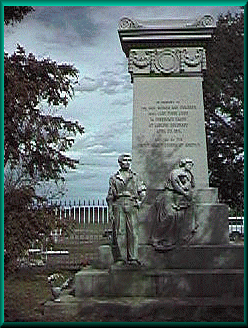
Pictured at left is the Ludlow Memorial.
The first decade of the 1900s witnessed thousands of European and Asiatic
immigrants coming into southern Colorado. The coming of these immigrants
radically change the work force, and in no small way played a major role
in the 1913-14 strike. At about the time the immigrants began arriving,
the United Mine Workers union was involved in an effort to unionize the
western states miners. Labor leaders, voicing dissatisfaction with how coal
companies were handling the immigrant influx, initiated a concerted effort
to unionize this new work force. Union officials soon learned, however,
that coal companies would provide stubborn opposition to unionizing efforts.
Not only did union organizers encounter problems stemming from company opposition,
but they also found unionizing efforts severely hampered because of language
barriers existing among immigrant miners. Adding to these problems, miners
remained cautious, for in many instances, those who chose to support union
movements found themselves being dismissed from their jobs. United Mine
Workers' union officials eventually broke down most barriers associated
with the miners, but continued to face opposition from coal company officials.
 The union called for coal companies to assure better and safer working
conditions, reasonable working hours and pay, and company compliance with
existing state mining laws. Officials with the companies on the other hand,
claimed it would not be in their interest to negotiate such concerns with
union representatives, claiming they did not recognize the UMW as an official
negotiating body. On September 15, 1913, Colorado coal miners, through their
delegates attending a special union convention at Trinidad, Colorado, voted
to strike. On September 23, 1913, Colorado's coal miners went on strike.
Those working the mines within Huerfano and Las Animas counties left the
camps and relocated their families into tent colonies located on leased
land near the camps. The largest colony, housing more than 1000 people,
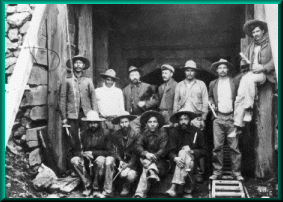
was located at Ludlow, Colorado about 12 miles northwest of Trinidad. Pictured
above is an example of the diverse heritage of the miners who worked in
the mines of the Ludlow area.
The union called for coal companies to assure better and safer working
conditions, reasonable working hours and pay, and company compliance with
existing state mining laws. Officials with the companies on the other hand,
claimed it would not be in their interest to negotiate such concerns with
union representatives, claiming they did not recognize the UMW as an official
negotiating body. On September 15, 1913, Colorado coal miners, through their
delegates attending a special union convention at Trinidad, Colorado, voted
to strike. On September 23, 1913, Colorado's coal miners went on strike.
Those working the mines within Huerfano and Las Animas counties left the
camps and relocated their families into tent colonies located on leased
land near the camps. The largest colony, housing more than 1000 people,
was located at Ludlow, Colorado about 12 miles northwest of Trinidad. Pictured
above is an example of the diverse heritage of the miners who worked in
the mines of the Ludlow area.
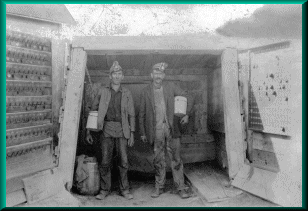 The strike brought with it an aura of tension, which by its very nature,
led to numerous clashes between strikers and employees of coal companies
such as Colorado Fuel and Iron Co., Rocky Mountain Fuel Co., and Victor
American (fuel) Co. These clashes resulted in destroyed property, injuries
to combatants, and even deaths. Eventually, Elias Ammons, then Colorado
governor, dispatched the Colorado State Militia into Huerfano and Las Animas
counties. Such an effort, he reasoned, would help to quell the clashes.
Though Ammons intended the militia to act as a peacekeeping body, such was
not to be. In a short time, Ammons' good intentions were negated, as the
militias' presence, for many reasons, led to even more confrontations. Ammons
eventually found it necessary to recall most of the militias. He left only
one small company (Company B), which was assigned to patrol the Ludlow area,
where numerous striker-company employee clashes had occurred. In mid-April
of 1914, at about the time Ammons recalled the main body of troops, local
coal companies joined together to create another militia unit, this know
as Company A. Since Company A gained official recognition, and almost immediately
was sworn in by official militia personnel. Many of the men found within
the ranks of Company A were from Ludlow area camps. Above picture depicts
two miners with their lunch buckets.
The strike brought with it an aura of tension, which by its very nature,
led to numerous clashes between strikers and employees of coal companies
such as Colorado Fuel and Iron Co., Rocky Mountain Fuel Co., and Victor
American (fuel) Co. These clashes resulted in destroyed property, injuries
to combatants, and even deaths. Eventually, Elias Ammons, then Colorado
governor, dispatched the Colorado State Militia into Huerfano and Las Animas
counties. Such an effort, he reasoned, would help to quell the clashes.
Though Ammons intended the militia to act as a peacekeeping body, such was
not to be. In a short time, Ammons' good intentions were negated, as the
militias' presence, for many reasons, led to even more confrontations. Ammons
eventually found it necessary to recall most of the militias. He left only
one small company (Company B), which was assigned to patrol the Ludlow area,
where numerous striker-company employee clashes had occurred. In mid-April
of 1914, at about the time Ammons recalled the main body of troops, local
coal companies joined together to create another militia unit, this know
as Company A. Since Company A gained official recognition, and almost immediately
was sworn in by official militia personnel. Many of the men found within
the ranks of Company A were from Ludlow area camps. Above picture depicts
two miners with their lunch buckets.
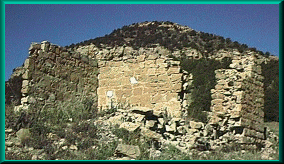 A Battle Scarred Prairie
On April 20, 1914, while the militia officer in charge of Company B and the leader of the Ludlow colony were meeting to discuss a particular matter, a number of Company B troopers- as instructed by superiors- located themselves atop Water Tank Hill, just south of Ludlow. Many colonists spotted the militiamen, and being quite concerned, armed themselves and moved to key points where they could closely watch activities atop the small hill. Other colonists, fearing something was awry and scurried about for cover. Suddenly the sound of riffle fire echoed through the nearby hills. Neither the militia nor the colonists knew who fired these shots. Despite this, an exchange of gunfire began, as both confused colonists and militiamen believed they were coming under attack. The above photo is of one of the ruins of Majestic mine. I own this property and would welcome any information as to its history, including photos and stories. Contact me at .
 Despite being badly outnumbered by the colonists, the militia had certain
advantages, including a choice location and a machine gun. The spray from
the gun drove armed strikers back toward the tents, and provided excellent
coverage for guardsmen advancing toward the tents. Meanwhile, Company A
reinforcements arrived to offer support to Company B. With them arrived
another machine gun. The colonists now faced two automatic weapons and about
150 guardsmen. Machine gun and rifle fire forced women and children colonists
to take refuge in storage cellars beneath the tents. Though this offered
some protection, advancing guardsmen eventually forced the cellar's occupants
to abandon the underground shelters and to move on toward the protective
Black Hills, located east of the colony site. By late afternoon, it was
obviously clear that the militia would overrun the colony site. It now was
necessary for everyone to abandon the site, and to join those who already
had fled to the Black Hills. Meanwhile, a deserted tent burst into flames.
Within a short time, more tents began to burn. At the same time, the militiamen
overran and took command of the colony site.
Despite being badly outnumbered by the colonists, the militia had certain
advantages, including a choice location and a machine gun. The spray from
the gun drove armed strikers back toward the tents, and provided excellent
coverage for guardsmen advancing toward the tents. Meanwhile, Company A
reinforcements arrived to offer support to Company B. With them arrived
another machine gun. The colonists now faced two automatic weapons and about
150 guardsmen. Machine gun and rifle fire forced women and children colonists
to take refuge in storage cellars beneath the tents. Though this offered
some protection, advancing guardsmen eventually forced the cellar's occupants
to abandon the underground shelters and to move on toward the protective
Black Hills, located east of the colony site. By late afternoon, it was
obviously clear that the militia would overrun the colony site. It now was
necessary for everyone to abandon the site, and to join those who already
had fled to the Black Hills. Meanwhile, a deserted tent burst into flames.
Within a short time, more tents began to burn. At the same time, the militiamen
overran and took command of the colony site.
 By early morning, April 21, 1914, the colony site- once covered by hundreds
of tents- revealed nothing more than charred rubble, once the earthly possessions
of those who resided within the tents. The brief but terrible battle left
many haunting memories. The bodies of two women and 11 children- victims
of asphyxiation- were found huddled within a cellar. Five strikers, 2 other
youngsters, and at least 4 men associated with the militia joined them in
death. Though the Ludlow battle ended on the night of April 20, 1914, the
woeful spirit of war carried on for days after. Battles that took place
at various coal camps claimed many more lives. In late April, federal troops
moved into southern Colorado-- almost immediately restoring peace. The strike,
however, continued through early December, finally coming to an end without
resolution. Despite the heavy loss of lives and property, the long and deadly
strike wasn't totally in vain. The effects of the strike, and equally the
effect of what occurred at Ludlow, encouraged state and federal lawmakers
to pass legislation, that in the long run, would allow working men and women
deserved dignity and respect. From all of this, a remote southern Colorado
prairie at Ludlow will always be deeply etched in the annals of coal mining
history.
By early morning, April 21, 1914, the colony site- once covered by hundreds
of tents- revealed nothing more than charred rubble, once the earthly possessions
of those who resided within the tents. The brief but terrible battle left
many haunting memories. The bodies of two women and 11 children- victims
of asphyxiation- were found huddled within a cellar. Five strikers, 2 other
youngsters, and at least 4 men associated with the militia joined them in
death. Though the Ludlow battle ended on the night of April 20, 1914, the
woeful spirit of war carried on for days after. Battles that took place
at various coal camps claimed many more lives. In late April, federal troops
moved into southern Colorado-- almost immediately restoring peace. The strike,
however, continued through early December, finally coming to an end without
resolution. Despite the heavy loss of lives and property, the long and deadly
strike wasn't totally in vain. The effects of the strike, and equally the
effect of what occurred at Ludlow, encouraged state and federal lawmakers
to pass legislation, that in the long run, would allow working men and women
deserved dignity and respect. From all of this, a remote southern Colorado
prairie at Ludlow will always be deeply etched in the annals of coal mining
history.
A memorial is located at Ludlow and the map above shows the mining communities
involved in the infamous tragedy.
Site Map |
La Junta Sites |
Lamar Sites |
Trinidad Sites |
Byway Museums |
Byway Events |
Byway Links |
