of the Santa Fe Trail |

of the Santa Fe Trail |
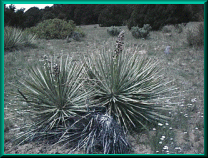 Southeast Colorado is rich with a diversity of natural values. In this
unique part of Colorado, prime agricultural land gives way to expanses of
native grassland. The landscape changes dramatically as elevation increases
in the vicinity of Raton Pass. Here the pinion pine/juniper ecosystem dominates.
The natural splendor of yucca and brightly colored cactus adorn the prairie.
The unspoiled beauty of Raton Pass and the nearby Spanish Peaks, lure many
visitors to the area. In places, rivers have carved canyons and valleys
leaving unusual rock formations along their path. Numerous warm-water lakes
dot the landscape, providing critical wildlife habitat. Significant waterfowl
populations live within and migrate through the Santa Fe Trail corridor.
Southeast Colorado is rich with a diversity of natural values. In this
unique part of Colorado, prime agricultural land gives way to expanses of
native grassland. The landscape changes dramatically as elevation increases
in the vicinity of Raton Pass. Here the pinion pine/juniper ecosystem dominates.
The natural splendor of yucca and brightly colored cactus adorn the prairie.
The unspoiled beauty of Raton Pass and the nearby Spanish Peaks, lure many
visitors to the area. In places, rivers have carved canyons and valleys
leaving unusual rock formations along their path. Numerous warm-water lakes
dot the landscape, providing critical wildlife habitat. Significant waterfowl
populations live within and migrate through the Santa Fe Trail corridor.

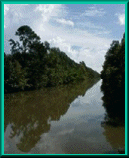 The area rivers and lakes also support relatively lush vegetation. Even
at a distance, one can discern the meandering paths of rivers by following
the ribbon of trees nurtured by the waterway. The ribbon of trees known
as the Big Timbers played a prominent part in the history of the Santa Fe
Trail. Wildlife is abundant throughout the region, supported by the extensive
public land holdings managed by various agencies. Comanche National Grassland
alone provides habitat for approximately 275 bird species, 60 mammal species,
40 reptile species, 11 fish species and 9 amphibian species.
The area rivers and lakes also support relatively lush vegetation. Even
at a distance, one can discern the meandering paths of rivers by following
the ribbon of trees nurtured by the waterway. The ribbon of trees known
as the Big Timbers played a prominent part in the history of the Santa Fe
Trail. Wildlife is abundant throughout the region, supported by the extensive
public land holdings managed by various agencies. Comanche National Grassland
alone provides habitat for approximately 275 bird species, 60 mammal species,
40 reptile species, 11 fish species and 9 amphibian species.
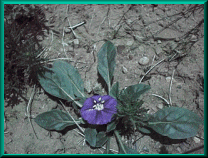
The Santa Fe Trail corridor also provides a natural experience that is rapidly disappearing elsewhere. The opportunity to experience the peace and quiet of an undisturbed and relatively pristine landscape. The prairie flora and fauna are spectacular during the spring, providing a kaleidoscope of color unmatched in its splendor as it unfolds throughout the Byway corridor.
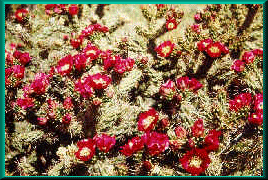
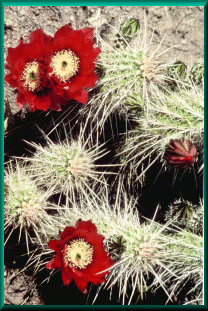
The cactus in the spring blooms and offers the most spectacular displays of bright and vivid colors I have ever seen. Mother nature works extra hard to entice us with its splendor on the prairie. It is as though she makes up for the lack of versatility in the trees and sparse water supplies. The tiny flowers are particularly colorful.
 Comanche National Grassland-Pioneers going to Bent's Fort passed through
the Timpas Unit of the Comanche National Grasslands. Now, one can hike,
camp, and ride horseback through the preserved grasslands.
Comanche National Grassland-Pioneers going to Bent's Fort passed through
the Timpas Unit of the Comanche National Grasslands. Now, one can hike,
camp, and ride horseback through the preserved grasslands.
Pinon Canyon Army Maneuvers Site
Fisher's Peak and the Spanish Peaks, two historically significant landmarks
which the National Park Service has designated high potential historic sites.
Dinosaur tracks at Picket Wire Canyon lands The nearby dinosaur track
ways in the Purgatoire Valley are unique and can be viewed with guides or
alone.
Picture Canyon
Lesser Prairie Chicken Viewing Area
The Arkansas and Purgatoire Rivers
John Martin Reservoir and Trinidad Lake State Park and the adjacent
State Wildlife Areas
Higbee and James M. John State Wildlife Areas
Prowers, Bent, Otero and Las Animas counties have been designated prime
farmland by the Soil Conservation Service.
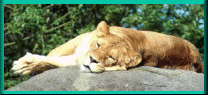 Prowers County is the wintering ground for thousands of flocks of Canadian
and snow geese. Many hunters come to Prowers County to participate in the
annual Two Shot Celebrity Goose Hunt. There are also many deer, pheasants,
duck, dove, and quail in the area. Wildlife watchers may see up to 15,000
geese at a time flying in formation and feeding on grain fields. There are
also humming birds, hawk and wintering bald eagles to watch. In the southeast
corner of our Byway bird watchers will delight in the annual display of
the mating season of the lesser prairie chicken, a rare and unusual occurrence
during the spring each year.
Prowers County is the wintering ground for thousands of flocks of Canadian
and snow geese. Many hunters come to Prowers County to participate in the
annual Two Shot Celebrity Goose Hunt. There are also many deer, pheasants,
duck, dove, and quail in the area. Wildlife watchers may see up to 15,000
geese at a time flying in formation and feeding on grain fields. There are
also humming birds, hawk and wintering bald eagles to watch. In the southeast
corner of our Byway bird watchers will delight in the annual display of
the mating season of the lesser prairie chicken, a rare and unusual occurrence
during the spring each year.
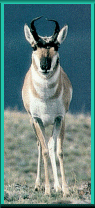
Throughout the Mountain Branch Byway there are vast herds of prong horn antelope viewable along the sides of the roadways as you drive through the prairie. It is quite a site! Nature is abundant and I personally have seen many astounding displays of the wildlife in the outskirts of the Trinidad area. I have seen up to 17 fox during the twilight of the evening. Among them, only 1 red tailed fox trapped and encircled by the others. It looked like a showdown from the old west, with mighty unfair odds. My presence alarmed them and they scurried off into the night.
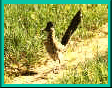 Trail visitors can spot an occasional bear and her cubs waddling across
the mountain in search for berries. Racing road runners and 30 wild turkeys
pecking around my yard for bugs, worms, tarantulas and many other gaudy
looking insects that inhabit the Santa Fe Trail. I once saw a large hairy
red ant sting a tarantula, paralyzing it, and carrying it off to his hole
in the ground for an afternoon snack. This country is wild and spectacular.
Those who visit have a hard time saying goodbye and carry many treasured
moments home with them. While visiting our Byway exercise caution with all
wildlife and respect their habitat, for their safety as well as yours.
Trail visitors can spot an occasional bear and her cubs waddling across
the mountain in search for berries. Racing road runners and 30 wild turkeys
pecking around my yard for bugs, worms, tarantulas and many other gaudy
looking insects that inhabit the Santa Fe Trail. I once saw a large hairy
red ant sting a tarantula, paralyzing it, and carrying it off to his hole
in the ground for an afternoon snack. This country is wild and spectacular.
Those who visit have a hard time saying goodbye and carry many treasured
moments home with them. While visiting our Byway exercise caution with all
wildlife and respect their habitat, for their safety as well as yours.
Site Map |
La Junta Sites |
Lamar Sites |
Trinidad Sites |
Byway Museums |
Byway Events |
Byway Links |
